Valencia is exploring new ways to improve urban energy efficiency through the use of existing infrastructure. The ICTs Against Climate Change (ICT VS CC) group of the ITACA Institute at the Polytechnic University of Valencia (UPV), led by Javier Urchueguía, in collaboration with EMIVASA and the City Council, is investigating the use of the low-pressure water distribution network as a source of thermal energy for building applications.
The initiative, funded by the Valencian Innovation Agency (AVI), analyzes the potential of integrating thermal energy in urban water into heat pump systems to meet heating, cooling, and domestic hot water demands in public and private buildings.
Assessment of the thermal potential of the urban network
AIGUATERM project focuses on the technical, energy, and hydraulic study of this solution, based on the premise of taking advantage of networks already in operation without the need to develop new large-scale infrastructure.
The objective is to determine how this existing infrastructure can help reduce energy consumption in buildings, where thermal services account for a significant share of demand.
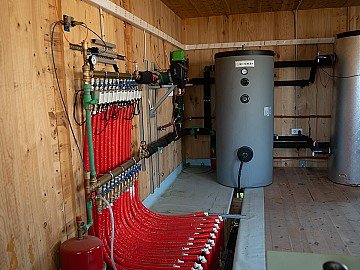
During the visit, held last week, researchers from ITACA explained to authorities how this infrastructure works.
Identification of locations with the greatest impact
One of the project’s main focuses is identifying strategic locations in the city where this technology can deliver better performance. In this regard, municipal buildings, educational centers, and sports facilities with high energy demand are being analyzed.
The City Council is already working on evaluating possible priority locations, aiming to maximize benefits in terms of energy savings and emissions reductions.
The collaboration among the university, business, and administration enables advancing toward more efficient energy models, based on the optimization of existing infrastructure and aligned with the objectives of the energy transition and decarbonization.
In addition, the project opens new perspectives for city energy management, integrating sustainability, technology, and the smart use of urban resources.