Satya Nadella’s Post
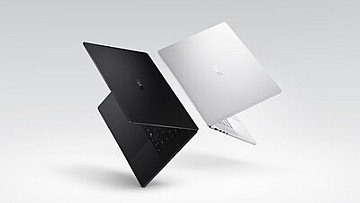
Our goal is to deliver unmetered intelligence to every home and every desk with Windows. NVIDIA RTX Spark marks a real breakthrough toward that vision. Looking forward to sharing more with Jensen, who will be joining us live from Taiwan, at Build this week! https://lnkd.in/gWNdTJ6v
The phrase "everyone has a computer" once changed an era; now, it seems the tech industry is moving towards "everyone has an AI assistant." What's truly noteworthy, perhaps, isn't the hardware itself, but how it will transform the way people work every day.
AI is accelerating semiconductor innovation faster than any era in history — but speed without governance creates risk. That’s why we built OPAS Authority OS: a governance‑first operating substrate for AI‑driven enterprises. If you’re building in: • AI‑accelerated chip design • Intelligent manufacturing • Advanced industrial automation • Enterprise‑safe AI operations Let’s connect. The next era of intelligent industry needs a governance backbone — and OPAS is built for exactly this moment.
If it looks like a coordinated narrative, sounds like a coordinated narrative, and appears everywhere at the same time, it probably isn’t a technological breakthrough. It’s a capital markets story. Now show me the evidence that the underlying systems are deterministic, auditable and reproducible.
Impressive vision, Satya. Making unmetered AI accessible across every home and desk could reshape personal computing and productivity. NVIDIA RTX Spark seems like a strong step toward enabling that scale. Excited to see what unfolds at Build in Taiwan.
This sounds like an old strategy built around a new core product, AI. Similar to where AT&T was back in the 70s and 80s with the internet ie acquiring NEC computers, and/or software solutions supporting their network or “intel inside” branding with computer manufacturers. The hardest question for a growth company is to stay with your core or expand.?.?
The integration of NVIDIA’s RTX Spark architecture into the Windows ecosystem is a pivotal step toward realizing truly local, agentic workflows. By providing a petaflop of AI performance and unified memory capacity to thin-and-light devices, this platform bridges the gap between enterprise-grade compute and daily professional mobility—effectively moving us beyond the cloud-dependent era and into the era of autonomous, on-device intelligence. A game-changer for AI-native software development.
'Unmetered intelligence' is the right north star, and the hardware layer is often underappreciated in this conversation. Most AI infrastructure discussions center on cloud, but edge AI changes the game for latency, privacy, and cost. At Sapiens AI, we're building privacy-first AI products precisely because local inference unlocks use cases that cloud architectures can't — not just technically, but from a user trust standpoint. The next 2 years of on-device AI are going to be significantly more disruptive than the last 2 years of cloud AI.
This feels like a significant step toward a future where powerful AI is no longer limited to the cloud. The combination of Windows, NVIDIA RTX Spark, and local AI capabilities could fundamentally change how developers, creators, and enterprises build and use intelligent applications. Running advanced models and agents directly on devices brings advantages in performance, privacy, latency, and user experience. What's particularly exciting is that we're moving from AI-powered PCs to PCs designed specifically for an AI-native world. The next generation of software won't just run on our devices—it will actively collaborate with us. 🚀
The broader trend is clear: intelligence is becoming a built-in layer of computing rather than a separate destination. As that happens, the competitive advantage may shift from simply having access to AI toward how effectively individuals and organizations incorporate it into the way they work, learn, and create.
To view or add a comment, sign in