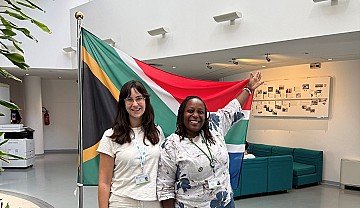
An ICGEB CRP grant has provided support for a collaboration between experts in pharmaceutical engineering at the German International University (GIU) in Cairo, Egypt, and the Cardiovascular Biology Group, ICGEB Trieste.
Cardiovascular diseases, including heart attacks and strokes, remain the leading cause of death worldwide. While many effective medicines exist, one of the biggest challenges is ensuring that these drugs reach the right tissues in the body in a safe and efficient way. A collaborative project between the German International University (GIU) in Cairo, Egypt, and the Cardiovascular Biology Group at ICGEB Trieste is helping to address this challenge through an innovative nanomedicine approach.
Supported by an ICGEB Collaborative Research Programme grant, researchers combined expertise in pharmaceutical engineering and cardiovascular biology to develop tiny drug-carrying particles designed to mimic the body’s own platelets, the blood cells involved in clotting and vascular repair. The team created biodegradable nanoparticles made from a material known as PLGA, loaded with therapeutic compounds and then coated with membranes derived from platelets. By giving the particles a “biological disguise“, the researchers aim to improve their ability to interact with blood vessels and deliver drugs more effectively.
A key achievement of the project was the successful integration of expertise across two countries and scientific disciplines. Scientists at GIU developed and produced the platelet-coated nanoparticles, while researchers at ICGEB evaluated their safety using human endothelial cells. The formulations were transferred from Cairo to Trieste, where they underwent biological testing in laboratory models relevant to cardiovascular disease.
The results established a robust platform for studying biomimetic nanomedicines and demonstrated the feasibility of combining advanced nanoparticle engineering with vascular biology research. Importantly, the project has laid the groundwork for future studies aimed at determining whether these particles can improve targeted drug delivery in patients with cardiovascular conditions.
Beyond the scientific findings, the grant has fostered international knowledge exchange and created new opportunities for long-term collaboration between the two institutions. The work has already been presented to the scientific community at the 2026 Controlled Release Society meeting in Lisbon and has been selected for an oral presentation at the Galenus International Workshop in Mainz, Germany.