21 October 2026
Researchers at Human Technopole have developed an innovative approach that integrates cell morphology with transcriptional profiling to better classify glioblastoma stem-like cells and predict their behaviour and response to therapy. The study, published in Neuro-Oncology, highlights the potential of cell morphology in providing both prognostic and therapeutic strategies for glioblastoma.
We are often told not to judge a book by its cover, but is it always true? In biology, cell morphology can reveal important features of cellular identity, complementing the information provided by molecular profiling.
The Kalebic Group at Human Technopole validated this concept in glioblastoma (GBM), one of their core research topics, demonstrating that cell morphology provides important insights into cellular behaviour and therapy response.
Glioblastoma is the most common and aggressive primary malignant brain tumour in adults and remains a major clinical challenge because of its rapid progression, resistance to treatment, and high risk of recurrence. These malignant features are driven in part by a heterogeneous subpopulation of tumour cells called Glioblastoma Stem-Like Cells (GSLCs).
This heterogeneity is reflected in the presence of different transcriptional profiles both within the same tumour and across patients. However, a transcriptome-based classification alone does not fully capture distinct behaviours of GSLCs.
To fill this gap, the Kalebic Group developed CellShape-seq, a customised spatial transcriptomics approach that integrates cell morphology with transcriptional profiling. This work was made possible by the excellent support provided by the Human Technopole National Facilities for Light Imaging, Genomics, and Data Handling and Analysis, whose extensive expertise enabled the establishment of a coordinated pipeline from sample preparation and acquisition to data processing and interpretation.
The researchers applied CellShape-seq to patient-derived GBM organoids, tiny 3D models that preserve key features of tumour’s cellular heterogeneity and microenvironment. Here, they identified three GSLC morphological classes with distinct transcriptional and behavioral features: nonpolar, elongated, and multipolar cells. Strikingly, while the elongated cells were highly invasive along the blood vessels, multipolar cells formed functional multi-cellular networks.
While in stable conditions GSLC morphology was faithfully maintained through generations of cells, pharmacological treatment triggered phenotypic plasticity. Each morphological class exhibited drug-specific resistances and vulnerabilities, which became evident in response to different therapeutics.
This conditional morphological plasticity created a vicious cycle: each therapeutic strategy gave rise to drug-specific resistance, thus requiring an alternative treatment. Importantly, a regime with the three drugs in combination, each targeting a distinct morphological class, significantly reduced GSLC viability in patient-derived organoids.
“These results show the potential of cell morphology as an integrative layer between transcriptome and cellular functions,”explainsCarlotta Barelli, PhD student in the Kalebic Group and first author of this study.“This project allowed us to reveal greater heterogeneity among stem cells than previously thought and to identify cellular states associated with clinically relevant functions.”
Indeed, CellShape-seq enabled the identification of targetable therapeutic vulnerabilities in patient-derived GBM organoids, revealing that a cover can sometimes be as insightful as the book.
Nereo Kalebic, Senior Research Group Leader in the Neurogenomics Research Centre and corresponding author of this study, concludes: “By suggesting that a cell morphology-informed approach might help overcome therapy resistance, our findings propose a novel concept for the clinical management of glioblastoma patients and pave the way for future work aimed at improving their prognosis and outcome.”
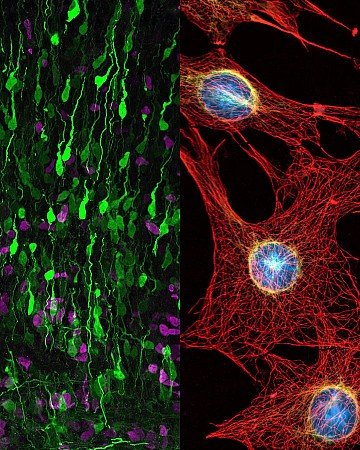
In the image: Primary glioblastoma tissue harboring glioblastoma stem-like cells identified through the expression of stemness markers Nestin (green) and SOX2 (magenta). Notably these cells have very complex and diverse morphologies, ranging from elongated to highly branched.
Carlotta Barelli, Matteo Bonfanti, Filippo Mirabella, Dario Ricca, Negin Alizadehmohajer, Roberta Bosotti, Ilaria Bertani, Viktoria Sokolova, Alberto Campione, Giovanni M Sicuri, Clelia Peano, Stefania Faletti, Roberto Stefini, Nereo Kalebic, Stem cell morphology defines functional heterogeneity and therapeutic vulnerabilities in glioblastoma, Neuro-Oncology, 2026;, noag235, https://doi.org/10.1093/neuonc/noag235