SMART mobility fellow from Nigeria, Esan Adewale’s stay in Tunisia led to a recent publication in the Springer Nature Discover Plants Journal
Environmental stresses such as soil salinity and drought pose significant challenges to agricultural productivity. For researchers like Esan Adewale, a specialist in plant biochemistry and agricultural biotechnology from Nigeria, finding sustainable ways to help crops withstand these conditions is central to improving agricultural production and supporting food security.
Through an ICGEB SMART (Scientific Mobility for Advanced Research Training) fellowship, Adewale expanded his expertise in biological approaches to plant stress management at the Centre of Biotechnology in Sfax, Tunisia, under the supervision of Prof. Slim Tounsi – Director of the Centre and ICGEB Appointed Governor for Tunisia. He investigated the potential of salt-tolerant rhizobacteria to help tomato plants cope with saline soil, while gaining practical experience and research skills that he is now applying in Nigeria.
My experience during the fellowship in Tunisia was both experimentally enriching and personally transformative. The training strengthened my confidence as a researcher, developed new analytical skills and gave me new approaches to bring back to my work in Nigeria.
How did you become interested in plant biochemistry?
“My interest grew as a result of the various environmental challenges that affect agricultural productivity,” says Adewale, whose research focuses on how plants respond to abiotic stresses, particularly salinity and drought. These environmental conditions can limit crop growth and reduce both yield and quality. At the same time, agricultural production often relies heavily on chemical inputs, including fertilisers, whose excessive use can negatively affect soil fertility and raise wider environmental concerns. Adewale’s research has therefore focused on biological strategies that could reduce dependence on chemical inputs while helping crops grow under challenging conditions. His earlier work explored the use of plant hormones, or phytohormones, to support plant growth and stress responses.
During his fellowship in Tunisia, he broadened this approach by exploring the use of plant growth-promoting rhizobacteria: beneficial bacteria that live in the soil around plant roots and can support plant development through different mechanisms. His work is particularly relevant to crops important to Nigerian agriculture, including tomato, okra, maize, soybean and groundnut. By investigating biological approaches to environmental stress, he aims to contribute to more resilient crop production and, ultimately, food security.
How did the ICGEB SMART fellowship contribute to your recent publication in Nature?
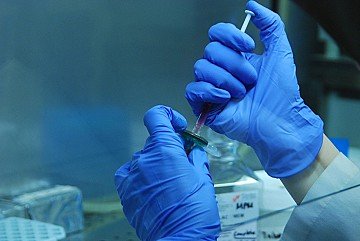
“The state-of-the-art facilities I used in Tunisia were instrumental in strengthening my research,” he explains. This training proved particularly valuable for a study investigating salt-tolerant rhizobacteria and their potential to alleviate soil stress in the Rio Grande tomato variety. The research involved isolating bacteria from soil collected near the Mediterranean coast, culturing them under progressively increasing salt concentrations, and selecting strains capable of tolerating saline conditions. Molecular analysis, including PCR amplification and gene sequencing, enabled the team to identify the strains as Bacillus santosi and Bacillus tequilensis, as reported in the paper.
And how was your current work impacted?
Working at the Centre of Biotechnology of Sfax allowed me to use molecular biology techniques, including PCR, gel electrophoresis, and gene sequencing, to broaden my experimental capabilities. The fellowship also expanded the scope of my scientific interests.
Before travelling to Tunisia, Adewale’s work had focused primarily on abiotic stresses, such as salinity and drought. Through interactions with colleagues investigating the effects of insects and other biological stresses on crop growth, he gained a broader perspective on the different challenges plants face in agricultural environments. Adewale is now applying what he learned during the fellowship: he is working with his students in Nigeria on a project to investigate whether similar techniques can improve crop performance under salinity stress in another crop species.
Link to the publication: Harnessing the roles of halotolerant rhizobacteria in salt stress modulation in the Rio Grande tomato plant variety