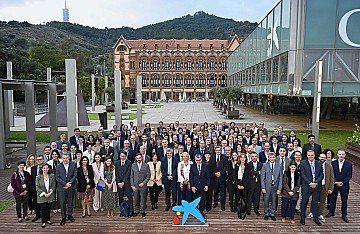
The third edition of the Barcelona Blood-Brain Barrier (B4) Conference, jointly organised by the Institute for Bioengineering of Catalonia (IBEC) and the Institut Químic de Sarrià (IQS), took place from 3 to 5 November 2026 at the Barcelona Biomedical Research Park (PRBB). Over three days, 200 researchers from across the world shared their latest work on the blood-brain barrier (BBB), from how it forms and functions to its role in disease and new strategies to deliver therapies to the brain.
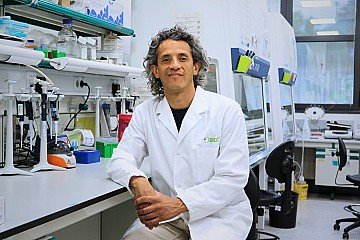
The BBB separates the blood circulation from brain tissue. Far from being a static wall, it is a highly dynamic interface that protects the brain while responding to its changing needs. It is also one of the main obstacles to getting drugs into the brain, which makes it a central topic both for understanding neurological diseases and for developing new treatments. The conference was chaired by Daniel Gonzalez-Carter, ‘Ramon y Cajal’ senior research fellow at IBEC, Benjamí Oller Salvia, group leader at IQS – Ramon Llull University and Giuseppe Battaglia, ICREA Research Professor and leader of the Molecular Bionics group at IBEC.
The programme combined keynote lectures, invited talks, parallel oral sessions and three poster sessions, with nearly 70 oral presentations and more than 60 posters, bringing together neuroscience, vascular biology, protein engineering, bioengineering and nanomedicine.
Keynote lectures
Benoit Vanhollebeke, from the Université libre de Bruxelles (ULB, Belgium), opened the conference with a lecture on the single-cell regulation of brain angiogenesis and BBB formation, from molecular mechanisms to strategies to repair the barrier. His ERC-funded laboratory studies the signalling pathways that control the growth of brain blood vessels and the integrity of the barrier.
On the second day, Feng Shao, investigator and deputy director at the National Institute of Biological Sciences (NIBS) in Beijing, China, presented his work on how the activation of the protein gasdermin D (GSDMD) in brain endothelial cells mediates the breakdown of the BBB during inflammation.
Viviana Gradinaru, Professor of Neuroscience and Biological Engineering at the California Institute of Technology (Caltech, USA), opened the final day with a talk on the BBB as both “friend and foe”: a defence for the brain and a barrier to treatment. Her laboratory studies brain-body interactions in neurodegeneration and develops technologies to deliver genes to the brain through the bloodstream rather than through surgery.
Invited speakers and scientific programme
The programme also featured nine invited speakers: Miguel Castanho (University of Lisbon, Portugal), Kylie Chew (Denali Therapeutics, USA), Blanca Díaz-Castro (UK Dementia Research Institute, University of Edinburgh, UK), Kavi Devraj (BITS Pilani, Hyderabad Campus, India), Simon McArthur (Queen Mary University of London, UK), Joseph Nicolazzo (Monash University, Australia), Dominik Paquet (LMU Munich, Germany), Carmen Ruiz de Almodóvar (University of Bonn, Germany) and Avi Schroeder (Technion – Israel Institute of Technology, Israel). Their talks ranged from viral infections of the brain and the gut-brain axis to astrocyte-vasculature interactions in dementia, stem cell-derived 3D models of human brain tissue and the use of artificial intelligence in nanoparticle design.
Across the parallel sessions, participants discussed the role of the BBB in Alzheimer’s disease and other forms of dementia, stroke, epilepsy, brain tumours and ageing, as well as engineering approaches to cross the barrier, such as nanocarriers, antibody “brain shuttles”, BBB-on-a-chip devices and in vitro models built from human induced pluripotent stem cells (iPSCs).
Awards for early-career researchers
As in the previous edition, the conference recognised the work of early-career researchers with prizes for the best poster and oral presentations, supported by the International Brain Barriers Society (IBBS). The award for best poster went to Cloé Moëlo, from the Karolinska Institutet (Sweden) (first prize) and Georgios Tsafaras, from the VIB-KU Leuven Center for Brain & Disease Research (Belgium) (second prize), while the prizes for the best oral presentations were awarded to Chiara Zamboni, from the Institute for Translational Research (IRT) (Switzerland) (first prize) and Burcu Yaldiz, from IQS – Universitat Ramon Llull (Barcelona) (second prize).
With this third edition, the B4 Conference establishes itself as an international meeting point for the BBB research community, strengthening connections between disciplines and between basic and translational research.