Introduction
Understanding your customers is more crucial than ever. While traditional demographic segmentation provides a basic framework, it often falls short in capturing the nuances of consumer behavior. This is where behavioral segmentation comes in – a powerful tool that allows marketers to dive deeper into the actions, preferences, and patterns of their audience.
Behavioral segmentation is the process of dividing your customers into groups based on their behaviors, actions, and engagement patterns. Unlike static demographic data, behavioral insights provide a dynamic view of how customers interact with your brand, products, or services. This approach enables marketers to create highly targeted and personalized campaigns that resonate with specific customer segments.
The importance of behavioral segmentation cannot be overstated. Major players like Amazon and Netflix have leveraged this strategy to great effect, with behavioral segmentation and product recommendations accounting for 35% of Amazon’s consumer purchases and 75% of Netflix’s watched content. These success stories highlight the potential of behavioral segmentation to drive engagement, conversions, and customer loyalty.
In this blog, we’ll explore the fundamentals of behavioral segmentation, its various types and applications, and advanced techniques that can take your marketing efforts to the next level. Whether you’re new to the concept or looking to refine your existing strategies, this comprehensive guide will equip you with the knowledge and tools to implement effective behavioral segmentation in your marketing campaigns.
By the end of this blog, you’ll understand how to harness the power of behavioral data to create more targeted, relevant, and impactful marketing initiatives that drive results and foster stronger connections with your customers. Let’s dive in and unlock the potential of behavioral segmentation for your business.
Understanding Behavioral Segmentation
What is Behavioral Segmentation?
Behavioral segmentation is a marketing strategy that divides customers into groups based on their behaviors, actions, and patterns when interacting with a business, product, or service. This approach goes beyond basic demographic or geographic data, focusing instead on how customers behave throughout their journey with a brand.
Specifically, behavioral segmentation refers to the process of categorizing customers according to various factors such as:
- Purchasing behavior
- Usage patterns
- Brand interactions
- Decision-making processes
- Customer loyalty
- Occasion-based actions
Why is Behavioral Segmentation Important in Modern Marketing?
In today’s data-driven marketing landscape, behavioral segmentation has become increasingly crucial for several reasons:
- Personalization: It allows marketers to create highly targeted and personalized campaigns that resonate with specific customer segments.
- Improved ROI: By focusing on behaviors, marketers can allocate resources more effectively, targeting customers most likely to convert.
- Customer Retention: Understanding behavior patterns helps in developing strategies to increase customer loyalty and reduce churn.
- Product Development: Insights from behavioral segmentation can inform product improvements and new offerings.
- Competitive Advantage: Companies like Amazon and Netflix have leveraged behavioral segmentation to great effect, with it accounting for 35% of Amazon’s consumer purchases and 75% of Netflix’s watched content.
How it Differs from Other Segmentation Types
Behavioral segmentation stands apart from other segmentation methods in several key ways:
- Dynamic vs. Static: Unlike demographic or geographic segmentation, which rely on relatively static characteristics, behavioral segmentation captures dynamic, changing aspects of customer interactions.
- Action-Oriented: While psychographic segmentation focuses on attitudes and values, behavioral segmentation concentrates on actual actions and decisions.
- Predictive Power: Behavioral data often has stronger predictive power for future purchases or actions compared to other segmentation types.
- Complexity: Behavioral segmentation typically requires more sophisticated data collection and analysis tools compared to simpler segmentation methods.
- Personalization Potential: It offers greater opportunities for personalized marketing strategies and customer experiences.
By focusing on actual behaviors rather than assumed characteristics, behavioral segmentation provides marketers with a more nuanced and actionable understanding of their customer base, enabling more effective and targeted marketing strategies.
Types of Behavioral Segmentation
Behavioral segmentation can be categorized into several distinct types, each focusing on different aspects of customer behavior. Understanding these types allows marketers to create more targeted and effective strategies. Here are the main types of behavioral segmentation:
Purchasing Behavior
This type focuses on how customers make buying decisions. It includes:
- Frequency of purchases
- Average order value
- Products typically bought together
- Impulse vs. planned purchases
- Price sensitivity
Example: A retailer might segment customers into “frequent buyers,” “big spenders,” and “discount seekers” to tailor promotions accordingly.
Usage Behavior
Usage behavior segmentation looks at how customers interact with a product or service after purchase. It considers:
- Frequency of use
- Volume of use
- Type of use (e.g., personal vs. business)
- Features utilized
Example: A software company might segment users into “power users,” “occasional users,” and “basic users” to guide product development and support strategies.
Occasion-based Segmentation
This type categorizes customers based on the occasions or times when they engage with a product or service. It includes:
- Seasonal purchases
- Holiday-related buying
- Life events (e.g., weddings, graduations)
- Regular vs. special occasions
Example: A flower delivery service might segment customers into “Valentine’s Day shoppers,” “birthday gifters,” and “weekly bouquet subscribers.”
Benefits Sought
This segmentation focuses on the primary benefits or solutions customers are seeking when they choose a product or service. It considers:
- Problem-solving needs
- Desired outcomes
- Value propositions that resonate
Example: A fitness app might segment users into those seeking “weight loss,” “muscle gain,” or “general health maintenance.”
Customer Journey Stage
This type segments customers based on their position in the buying process or customer lifecycle. Stages typically include:
- Awareness
- Consideration
- Purchase
- Retention
- Advocacy
Example: An e-commerce platform might have different strategies for “first-time visitors,” “cart abandoners,” and “repeat customers.”
Customer Loyalty
Loyalty-based segmentation categorizes customers based on their level of commitment to a brand. Categories might include:
- Brand advocates
- Repeat customers
- Occasional buyers
- At-risk customers
Example: An airline might have different programs for “frequent flyers,” “occasional travelers,” and “one-time customers.”
User Status
This type segments customers based on their relationship with a product or service. Categories often include:
- Non-users
- First-time users
- Regular users
- Former users
Example: A streaming service might have different strategies for “trial users,” “long-term subscribers,” and “lapsed subscribers.”
By leveraging these different types of behavioral segmentation, marketers can create highly targeted campaigns that address specific customer needs and behaviors, ultimately leading to more effective marketing efforts and improved customer satisfaction.
Implementing Behavioral Segmentation
Effective implementation of behavioral segmentation requires a systematic approach to data collection, analysis, and application. Here’s how to put behavioral segmentation into practice:
Data Collection Methods
To gather behavioral data, companies can employ various methods:
- Website and app analytics: Track user interactions, page views, and click-through rates.
- Purchase history: Analyze transaction data, including frequency, recency, and monetary value.
- Customer feedback: Collect insights through surveys, reviews, and customer support interactions.
- Social media monitoring: Observe brand mentions, engagement, and sentiment across platforms.
- Email engagement: Monitor open rates, click-throughs, and response rates to campaigns.
Tools and Technologies
Several tools can facilitate behavioral segmentation:
- Customer Relationship Management (CRM) systems: These serve as vital tools for tracking and analyzing customer actions across various touchpoints.
- Analytics platforms: Tools like Google Analytics or Amplitude provide detailed insights into user behavior on websites and apps.
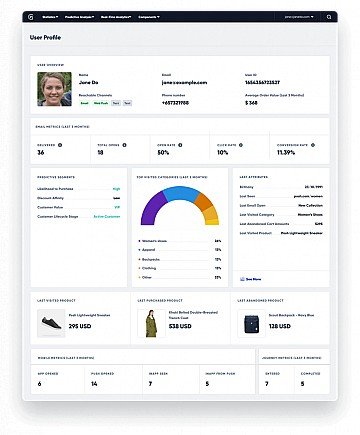
- Customer Engagement Platforms: Using tools like indigitall to communicate with your customers across all channels can help .
- Machine learning algorithms: Tools like indigitall include machine learning and ai which can help boost the efficiency of the segmentation process and optimize sales and marketing endeavors.
Key Metrics to Track
When implementing behavioral segmentation, focus on these essential metrics:
- Customer Lifetime Value (CLV)
- Purchase frequency and recency
- Average order value
- Churn rate
- Engagement rate (e.g., app usage, email opens)
- Conversion rate
- Time spent on site/app
- Feature adoption rate
Creating Customer Personas
Developing customer personas based on behavioral data involves:
- Identifying common behavioral patterns among user groups
- Combining behavioral data with demographic and psychographic information
- Creating detailed profiles that include:
- Typical behaviors and actions
- Preferences and pain points
- Goals and motivations
- Preferred communication channels
- Validating personas through customer interviews or surveys
- Regularly updating personas based on new behavioral data
By following these steps and utilizing the right tools, businesses can effectively implement behavioral segmentation to create more targeted, personalized marketing strategies that resonate with their audience and drive better results.
Strategies for Effective Behavioral Segmentation
To maximize the impact of behavioral segmentation, marketers should employ a range of strategies that focus on identifying valuable segments, tailoring messages, personalizing experiences, and continuously optimizing efforts.
Identifying Valuable Segments
- Analyze customer lifetime value (CLV): Focus on segments with the highest potential for long-term profitability.
- Utilize RFM analysis: Segment customers based on Recency, Frequency, and Monetary value of their purchases.
- Conduct cohort analysis: Group customers based on shared characteristics or experiences over time.
- Implement predictive modeling: Use machine learning algorithms to identify segments likely to respond positively to marketing efforts.
- Assess segment size and growth potential: Prioritize segments that offer scalable opportunities.
Tailoring Marketing Messages
- Develop segment-specific value propositions: Craft messaging that addresses the unique needs and preferences of each segment.
- Use appropriate tone and language: Adjust communication style to resonate with different behavioral segments.
- Highlight relevant features or benefits: Focus on aspects of your product or service that are most appealing to each segment.
- Create targeted content: Develop blog posts, videos, or infographics that address specific behavioral segment interests.
- Customize call-to-actions (CTAs): Design CTAs that align with the typical behavior and motivations of each segment.
Personalization Techniques
- Dynamic content: Implement website or email content that changes based on user behavior or preferences.
- Product recommendations: Use collaborative filtering or content-based filtering to suggest relevant products.
- Behavioral triggers: Set up automated messages or actions based on specific user behaviors.
- Personalized pricing: Offer dynamic pricing or promotions based on individual user behavior and purchase history.
- Custom user journeys: Create tailored onboarding experiences or app interfaces based on user behavior and preferences.
A/B Testing and Optimization
- Test omnichannel messaging variations: Compare different headlines, copy, or offers to see which resonates best with each segment.
- Experiment with design elements: Test various layouts, colors, or images to optimize visual appeal for different segments.
- Optimize timing and frequency: Test different send times for emails or frequency of retargeting ads for each segment.
- Compare channel effectiveness: Evaluate which marketing channels work best for different behavioral segments.
- Continuous iteration: Regularly analyze test results and implement improvements based on findings.
- Multi-variate testing: Test multiple variables simultaneously to identify optimal combinations for each segment.
By implementing these strategies, marketers can effectively leverage behavioral segmentation to create more targeted, personalized, and impactful marketing campaigns. Remember that behavioral segmentation is an ongoing process, requiring constant refinement and adaptation as customer behaviors evolve and new data becomes available.
Advanced Strategies for Behavioral Segmentation
As behavioral segmentation evolves, marketers are employing increasingly sophisticated techniques to gain deeper insights and create more personalized experiences. Here are some advanced strategies:
Predictive Behavioral Segmentation
Predictive behavioral segmentation uses machine learning algorithms to forecast future customer behaviors based on historical data. This approach allows marketers to anticipate customer