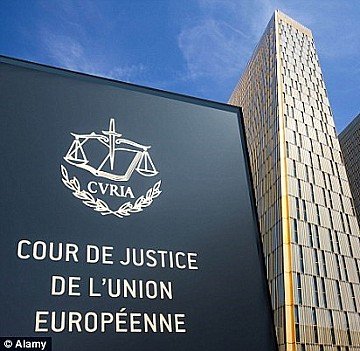
In a major development, Advocate General of Europe’s top court has issued an opinion considering Hungary’s anti-LGBTI legislation to be in breach of EU law, raising urgent questions about the legality of this year’s ban on Pride marches, according to ILGA-Europe.
Today, Advocate General Tamara Ćapeta delivered her Opinion in infringement case C-769/22 (the “EU values” case), brought by the European Commission against Hungary over the “anti-LGBTI propaganda legislation” introduced in June 2021. This law, Act LXXIX of 2021, censors inclusive sex education, equates LGBTI ‘lifestyles’ with paedophilia, and restricts LGBTI content in media and advertising.
The Advocate General proposes that the Court find Hungary in violation of EU law on all grounds raised by the European Commission. She considers the law to infringe the freedom to provide and receive services as enshrined in the Treaties, as well in the e-Commerce Directive, the Services Directive, the Audiovisual Media Services Directive, and the General Data Protection Regulation.
Second, she finds that the law interferes with several fundamental rights under the Charter: the prohibition of discrimination based on sexual orientation and sex, respect for private and family life, freedom of expression and information, the right to protection of personal data and the right to human dignity. She explains that, under the guise of protecting minors, the Hungarian law bans the portrayal of the everyday lives of LGBTI people, reflecting a value judgment that homosexual and non-cisgender lives are less valid than heterosexual and cisgender ones.
Third, and importantly, the Advocate General believes the Court should find a standalone infringement of Article 2 TEU, which sets out the EU’s fundamental values. She affirms that equal respect for LGBTI persons in Member States is not open to contestation. Disrespect and marginalisation of any group, she says, cross the ‘red lines’ set by the values of equality, human dignity, and human rights. By undermining LGBTI equality, Hungary has violated these core values and significantly deviated from the model of constitutional democracy enshrined in Article 2 TEU.
The AG opinion comes at a crucial moment as in March this year, Hungary’s Parliament passed a package of amendments banning and criminalising Pride marches and their organisers, with penalties including exorbitant fines, and in certain cases, imprisonment. This amendment package builds on the 2021 anti-LGBTI law and expands its application to the exercise of the right to freedom of peaceful assembly.
According to ILGA-Europe, the fact that the AG’s opinion is clearly indicating that Hungary breached EU law by enacting the anti-LGBTI legislation in 2021 means that the package of amendments adopted this year based on the anti-LGBTI legislation should also be considered as violating EU law.
On 16 April, ILGA-Europe, together with Hungarian and European LGBTI and human rights organisations, demanded urgent action from the European Commission requesting an interim measure in the ongoing infringement procedure to stop the ban from being implemented. By today, the Hungarian police has already twice used the ban on notified LGBTI events.
Without immediate action from the European Commission, the risk of serious and irreparable harm is imminent, including significant fines, the possibility of imprisonment of individuals, dispersal of the march, and dissolution of organisation(s) responsible for the organisation of the march.
Says ILGA-Europe’s Advocacy Director, Katrin Hugendubel: “The AG’s opinion is very clear in that Hungary breaches EU law and the Treaties by enacting the anti-LGBTI legislation from 2021. The new package of amendments adopted this year to criminalise Pride marches and their organisers builds directly on that unlawful legislation and must therefore also be considered a violation of EU law.
“The extent of the breaches is particularly striking: one provision of the TFEU, three directives and one regulation, five Charter provisions (so five fundamental rights), and the EU’s foundational values. This constitutes a serious and flagrant violation of multiple core EU rules.
“It is time for the European Commission to act and request interim measures in the ongoing infringement procedure to prevent further violations of fundamental rights, including the rights to peacefully assemble and to protest. The Advocate General confirmed that LGBTI persons deserving equal respect in Member States is not open to contestation.”
Background
The Commission initiated the infringement procedure in July 2021 and referred Hungary to the CJEU in July 2022. It was joined in this procedure by 16 Member States (Austria, Belgium, France, Denmark, Estonia, Finland, Germany, Greece, Ireland, Luxembourg, Malta, the Netherlands, Portugal, Slovenia, Spain and Sweden, among which 12 were present at the hearing) and the European Parliament that intervened in support of the Commission’s position.
The Commission asked the CJEU to declare that, by adopting this law, Hungary has failed to fulfil its obligations under EU law. The Commission argued that the Hungarian state had seriously and blatantly violated EU law by passing a law that stigmatises the LGBTI community under the guise of “child protection”. In the Commission’s view, this infringement is systemic, intentional and widespread, and constitutes a serious violation of Article 2 of the Treaty on European Union (TEU). This provision enshrines the fundamental values of the EU, including the obligation of Member States to respect human dignity, freedom, equality, the rule of law and the rights of persons belonging to minorities.
The Commission also claimed that Hungary violated rights enshrined in the EU Charter of Fundamental Rights, such as the right to human dignity, freedom of expression, the right to private and family life and the prohibition of discrimination, as well as GDPR and directives on electronic commerce, on services in the internal market and on audiovisual media services.
While Advocate General’s opinions are not binding for the CJEU, their conclusions are taken into consideration by the CJEU judges and are often indicative of their ruling. A judgment in this case is expected later this year.
Special Webinar on CJEU Advocate General Opinion
On Thursday 12 June at 12:30 CEST, ILGA-Europe will host a webinar discussing what this Opinion means for the case and legal actions urgently needed by the European Commission against Hungary in the aftermath of Hungary’s ban on Pride events and draft anti-CSOs law, but also potential future actions against other EU countries as anti-LGBTI and anti-CSOs bills are spreading in the region. Register here.