From protests to policies, advocacy takes many forms.
Here’s how YOU can start.
Advocacy is a powerful form of activism that promotes social change by expanding rights, rules, and resources for groups historically excluded or marginalized. It is collective, strategic, and operates on many levels, from raising awareness and engaging with institutions to launching campaigns, demonstrations, and petitions.
When women lead advocacy, it becomes even more impactful. They have long been on the front lines of the fight for gender equality. Today, that fight means demanding equal pay, political representation, freedom from gender-based violence, LGBTIQ+ rights, and universal access to healthcare and education. But what are the main ways women, whether working in politics or not, can be involved in advocacy today?
From history to today
Advocacy doesn’t just belong to the past. It’s alive in the voices of suffragettes, civil rights activists, feminist movements, and in today’s digital campaigns like #MeToo and #YouthForClimateChange. These efforts often start at the grassroots and grow into true political forces, driven by young people who transform lived experience into collective action.
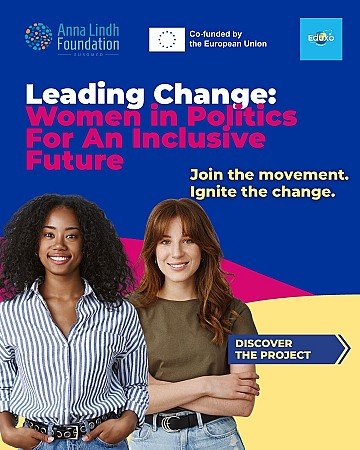
The European campaign “Leading change: Women in Politics for an Inclusive Future” is a powerful contemporary example. The initiative aims to empower young women, especially in Italy and Greece, to raise their voices and claim their space in politics. By addressing cultural biases, systemic barriers, and the lack of political representation, the campaign is a catalyst for change and a model of inclusive advocacy.
Barriers and opportunities
Many studies found that women, especially in politics, face ageism in every step of their career, and more often than their male counterparts: when they are young, they tend to be patronized and not taken seriously enough, while when they are old, they are considered too outdated to be involved in new opportunities and in crucial contemporary debates. Here’s why one of the first step to encourage women’s advocacy and fight gender ageism is to give women the opportunity to engage in politics from a young age. The YouthPowerEU campaign, launched by Eduxo, aims to lower the minimum age of eligibility, still set at 25, for candidates from Italy and Greece in the European elections.
However, besides direct involvement through elections, women can do advocacy in many ways. This is true especially nowadays, when a variety of digital tools allows community mobilisation and bottom-up participation.
To be effective, advocacy requires the right tools and strategies:
- Public demonstrations: Organising public demonstrations is a direct and effective way of drawing attention to campaign themes. Bringing together people who share the same goals, occupying public spaces and giving visibility to claims is fundamental to building a bottom-up movement and generating collective pressure on institutions.
- Media campaigns: A well-planned media campaign allows you to reach different targets through specific content: videos, videos, stories and targeted posts. Using social media strategically helps to engage new generations, raise public awareness and spread the message in a viral way.
- Data collection and research: bottom-up participation also means involving marginalized communities through the creation and completion of questionnaires, in order to gain a clearer understanding of existing inequalities and to share the results to a broader audience that can take action. This point is tightly connected to public education.
- Public civic education: Informing and raising public awareness helps to overcome stereotypes and cultural resistance, as well as make people more aware of their rights. Although it’s true that education is an institutional factor, something everyone can do today is offer accessible information through bite-sized explainers and infographics (of course, related to one’s expertise).
- Institutional dialogue: contacting institutions, as well as important stakeholders, is now possible through various means of communication, shortening the perceived distance between local communities and political leaders. Therefore, women of all ages can and must take action to make their voices heard.
- Legal action and lobbying: filing appeals, denouncing injustices, and holding institutions accountable can lead to structural change.
- Alliances with other groups: advocacy is a process that often starts from the grassroots, from the local community, and builds outward. The battle against systemic barriers is intersectional, therefore bringing together different marginalized groups can help amplify voices and take new perspectives into consideration.
- Testimonies that amplify the message: It is essential to collect authentic testimonies from those who have experienced firsthand the obstacles that you want to break down. Influencers, activists, women who have faced discrimination or any obstacles in politics: their voices make visible what often remains invisible, giving strength and credibility to the campaign.
Advocacy is not one-size-fits-all. It can take many forms a protest, a law, a social post, or a gesture of solidarity. What matters is the intent and the impact.
Women can and must use advocacy to transform social, cultural, and economic systems that still hold inequality in place.
Leading Change – Women in Politics for an Inclusive Future is part of the Mediterranean Youth in Action Transformative Narratives programme, implemented by the Anna Lindh Foundation. The programme serves as a platform for young influencers and digital content creators to create meaningful content and lead social media initiatives and awareness campaigns that highlight youth voices, strengthen media narratives, and promote intercultural dialogue across the Euro-Mediterranean region.