Youth Skills for Democracy: Why Learning is the Key to Leading Change
Tomorrow, July 15, we celebrate World Youth Skills Day, established in 2014 by the United Nations to recognize the essential role of young people in the economic, social, and cultural development of communities. The goal is to promote the right of everyone to receive inclusive, quality education that can meet the challenges of the present and the future.
In a world marked by multiple crises (environmental, digital, political) investing in youth skills is not just an employment strategy, but a democratic priority. The ecological and digital transitions require new technical and transversal skills, as well as cultural tools to navigate change consciously and inclusively.
It’s not just about training workers. Skills are needed to express oneself, participate, and transform. They mean being able to understand complexity, communicate, collaborate, and care for the community. From this perspective, education and training become tools for emancipation, justice, and inclusion.
According to the ILO (International Labour Organization), young people are three times more likely to be unemployed than adults. But behind the numbers lie inequalities in access, especially for youth with migrant backgrounds, disabilities, or from disadvantaged areas.
There is often a mismatch between the knowledge acquired in school and at university and the demands of the job market: the latter is evolving at a rapid pace and requires advanced skills in fields like AI or data science, while academic curricula are often outdated and can’t keep up. But it’s not only about hard skills: soft skills like communication, adaptability and critical thinking are increasingly valued, while the academic field usually values more theoretical knowledge than practical skills. To develop real word problem solving, students need to back up their academic knowledge through internships and apprenticeships, which most students from disadvantaged backgrounds can’t afford or can’t access.
That’s why July 15 is also an opportunity to draw attention to the systemic barriers that hinder access to fair and meaningful educational paths.
How can we address the gaps?
International organisations, starting with UNESCO, promote technical and vocational education and training (TVET) as a key tool to combine theoretical knowledge with practical skills.
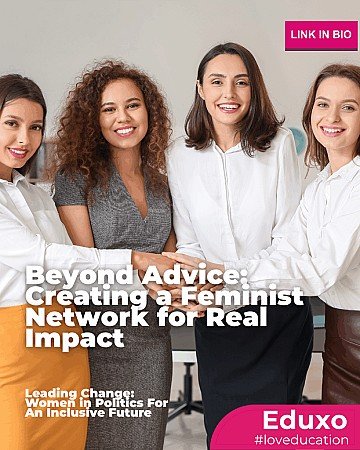
Another solution is encouraging lifelong learning and education, that is, ongoing skills development even after the end of formal education. This is possible not only through internships and practical laboratories, but also mentorship programs, like the Eduxo’s just launched mentorship programme for young women in the context of “Leading change”, funded by the European Union and the Anna Lindh Foundation, which allow young people to receive advice from experienced professionals in their field (in the latter, politics and advocacy).
Mentorship programmes are especially useful for disadvantaged communities and marginalized communities: they allow young people to connect to professionals and experts with similar backgrounds or complementary experiences, who can share tips on overcoming barriers. Hearing stories of success encourages youth, especially those with lesser opportunities, to be ambitious and pursuit a career in their dream field.
For instance, the Mentorship Programme from the “Leading Change: Women in Politics for an Inclusive Future” campaign aims to involve young women in political participation and increase their advocacy skills. This is especially important because women are traditionally discouraged from pursuing a career in politics, and taken less seriously, especially if they are young, especially in the Euro-mediterranean region.
What’s even more needed than a tool for developing skills in politics, is a network of support and representation: studies show that on average, women are much less confident in their political skills than men.
It is crucial that these pathways of life-long learning are not viewed as “second-class” options, but rather fully valued and connected to ongoing social and environmental transitions. In 2024, the UN focuses on the theme “Skills for Peace and Resilience,” emphasizing how education can help prevent conflict, build social cohesion, and amplify democratic and inclusive voices.
Promoting youth skills requires an educational pact between institutions, schools, families, communities, the third sector, and the world of work. It is necessary to provide spaces, resources, and support: from school guidance to mentoring programs, from educational welfare policies to intergenerational alliances. Youth leadership is not a utopia. It is already a reality in environmental movements, feminist networks, civil rights activism, research, art, and care work.
On this day, we celebrate not only the potential of young people but also the urgency of ensuring they have the necessary tools to build a fair, equitable, and sustainable future. Investing in skills means investing in a democracy.
📢 Disclaimer: Leading Change – Women in Politics for an Inclusive Future is part of the Mediterranean Youth in Action Transformative Narratives programme, implemented by the Anna Lindh Foundation. The programme serves as a platform for young influencers and digital content creators to create meaningful content and lead social media initiatives and awareness campaigns that highlight youth voices, strengthen media narratives, and promote intercultural dialogue across the Euro-Mediterranean region.