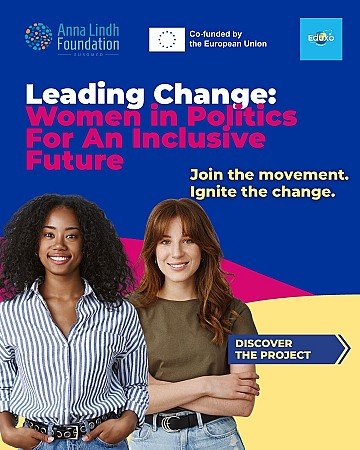
In a world where leadership often looks uniform and inaccessible, EDUXO’s Leading Change: Women in Politics for an Inclusive Future campaign reminds us that true leadership starts in community, and that no one rises alone.
At the heart of this campaign lies a powerful mentorship programme, built to connect young women aged 18–25 with experienced mentors from across Europe. These mentors are activists, professionals, advocates, and changemakers who believe deeply in the importance of showing up for the next generation.
But this isn’t about top-down teaching. It’s about mutual growth. It’s about women lifting women, and walking the path of leadership together.
“Leading change takes community, and I would be honored to be part of someone’s journey.”
That’s how one mentor described her motivation. And she’s not alone.
In dozens of applications, women expressed a shared desire to give back, listen deeply, and stand beside young people just beginning to imagine themselves as political actors, community leaders, and advocates for change.
Many of them are motivated by personal stories: missed opportunities, harmful role models, or moments of invisibility in their own youth. Now, they want to be what they didn’t have.
“Women’s rights is my calling, and having received terrible advice and role models growing up, it’s even more important to pay it forward.”
Others are driven by a collective vision, one in which leadership is no longer gatekept, but co-created by those historically excluded from power.
“It’s absolutely essential that, as we come together more as women and people with a marginalized background, we share tips, observe each other’s growth, and guide each other on our paths.”
Mentorship as a Radical Act
Too often, mentorship is framed as a luxury, something reserved for elite spaces or career advancement. Leading Change reframes it as a radical, everyday act of feminist solidarity.
It’s about creating safe, empowering relationships in which young women, especially those from underrepresented communities, can begin to see themselves as capable of shaping the world around them. It’s also about mentors being open to learn, unlearn, and grow through the experience.
“I always learn a lot from these conversations myself, about other people and about myself.”
This reciprocity is key. Leading Change doesn’t position mentors as experts and mentees as passive recipients of knowledge. Instead, it builds relationships rooted in curiosity, trust, and mutual empowerment. Both sides grow. Both sides lead.
Why Now?
In 2025, the Euro-mediterranean region faces critical decisions, on democracy, rights, and the future of political participation. Yet too often, young women’s voices are sidelined in these conversations, especially in politics.
The mentorship programme of Leading Change works to change that. By building an ecosystem of support, solidarity, and care, it equips young women with the confidence, tools, and relationships they need to step into the arena—not alone, but with a network behind them.
“I want to give back by supporting a young woman who may be just beginning to imagine herself as a leader, advocate, or changemaker. Together, I hope we can build a relationship that fosters growth, confidence, and long-term impact.”
A Future Shaped by Women’s Voices
The mentors of Leading Change are planting seeds that will bloom far beyond the scope of this campaign. They are modeling a future in which leadership is inclusive, intersectional, and rooted in community.
“Women leading change so that women’s voices and perspectives help shape the future for all.”
These are not just quotes. They are commitments. They are stories of presence—of showing up for one another and choosing to lead forward, together.
Disclaimer: Leading Change – Women in Politics for an Inclusive Future is part of the Mediterranean Youth in Action Transformative Narratives programme, implemented by the Anna Lindh Foundation. The programme serves as a platform for young influencers and digital content creators to create meaningful content and lead social media initiatives and awareness campaigns that highlight youth voices, strengthen media narratives, and promote intercultural dialogue across the Euro-Mediterranean region.