Published in the Journal of Hepatology: Spatiotemporal liver dynamics shape hepatocellular heterogeneity and impact in vivo gene engineering
A publication from the Muro Group in the Journal of Hepatology holds major implications for pediatric gene therapy. In India, Dhiraj Kumar has been elected Fellow of the Indian National Science Academy: a round-up of recent scientific highlights from the ICGEB.
In a new study published in the Journal of Hepatology, Dr. Andrés Muro, in collaboration with researchers from the San Raffaele Telethon Institute for Gene Therapy (SR-Tiget), published findings with major implications for pediatric gene therapy. The study, which involved multidisciplinary contributions from molecular biologists, physicists, and bioinformaticians, has shown that only 15–20% of hepatocytes in newborn mice (dubbed clonogenic hepatocytes) are responsible for generating over 90% of the adult liver mass. Understanding the dynamics of this subset of hepatocytes early in life can help scientists to achieve more effective and durable correction of inherited liver diseases through in vivo gene engineering strategies such as lentiviral gene transfer and genome editing.
Link to the paper
Download the press release in EurekaAlert!
*
Dr. M.K. Reddy and collaborators have published a paper in Plant Molecular Biology entitled “Enhancing drought resilience in crops: mechanistic approaches in the face of climate challenges.” Working towards ensuring food security under increasingly unpredictable climate conditions, this review explores mechanistic approaches aimed to improve crop drought tolerance, focusing on physiological, biochemical, and molecular mechanisms.
*
Dr. Dhiraj Kumar, Group Leader of the Cellular Immunology Group at ICGEB New Delhi, has been elected Fellow of the Indian National Science Academy (INSA), India’s most prestigious institution dedicated to advancing science, for his cutting-edge research in Tuberculosis. Further reading.
*
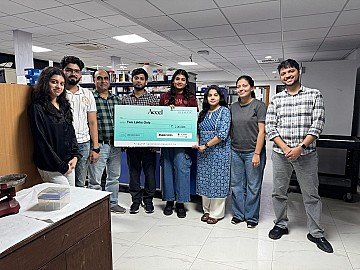
The Yeast Biofuel Group student team has won the National Bio Entrepreneurship Competition (NBEC) 2025 in the Clean and Renewable Energy category. NBEC, organised by the Centre for Cellular and Molecular Platforms (C-CAMP) in partnership with the Biotechnology Industry Research Assistance Council (BIRAC) under the Department of Biotechnology, Government of India, is a nationwide platform to identify and nurture bio-entrepreneurs with innovative and scalable business ideas for societal impact. Competing against over 1,000 teams, ours was one of six selected as winners, each in a distinct category: Drug Discovery and Development, Digital Health, Diagnostics, Water and Sanitation, Clean and Renewable Energy, and Medical Devices. The project, a novel dry yeast formulation for enhanced ethanol production from molasses and grains, showcased an innovative solution with significant potential for impact.