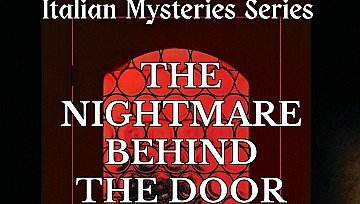
Every neighborhood has one—that house everyone whispers about. The one where something terrible happened, where the past refuses to stay buried. But what if accepting a simple house-sitting job could trap you in a nightmare that blurs the line between your deepest fears and a terrifying reality?
Welcome to “The Nightmare Behind the Door” by Fabrizio Valenza, a haunted house novel that proves Italian horror has its own dark voice to add to the genre’s most unsettling traditions.
The Enduring Power of the Haunted House
Haunted house stories have captivated readers for centuries, from Shirley Jackson’s The Haunting of Hill House to Stephen King’s The Shining. These aren’t just ghost stories—they’re psychological explorations of trauma, guilt, and the monsters we carry within ourselves. Research shows that horror fans develop greater psychological resilience, using fear as a form of emotional training. The haunted house serves as the perfect stage for this cathartic experience because it transforms our most basic sanctuary—home—into a source of dread.
But not all haunted houses are created equal. The best ones become characters in their own right, with appetites and intentions that shape the narrative as powerfully as any human protagonist.
A Villa That Breathes with Malevolence
“The Nightmare Behind the Door” introduces us to Enrico Malera, a night security guard who accepts what seems like an easy assignment: watching over his wealthy friend Gianfranco’s luxurious villa for one week. It’s a chance to taste a lifestyle he’s never known, to sleep in silk sheets and walk through marble halls.
But the villa near Verulengo has other plans.
From the moment Enrico descends into the basement to feed Black—a massive leonberger dog—something fundamental shifts. Lights turn on by themselves. Time seems suspended. The nearby town appears abandoned. And then there’s that door in the cellar, the one that shouldn’t be opened, the one behind which something scratches and breathes in the darkness.
This isn’t just a house with ghosts. It’s a house that feeds on envy, regret, and the sins we’ve tried to forget.
Where Gothic Tradition Meets Mediterranean Darkness
What sets this novel apart is its rootedness in Mediterranean gothic tradition—a different kind of horror that draws from ancient cults, the peculiar relationship between the sacred and the profane, and the weight of history that saturates every stone in Italian soil.
Verulengo itself harbors a dark secret: an ancient Rhaetian pantheon where a single insectoid deity replaced all others, brought by a foreign population that imposed violent and malevolent cults. The town has never exceeded 2,500 inhabitants, as if something prevents it from growing. This detail isn’t just atmospheric—it’s a reminder that in Mediterranean horror, the past is never really past. It seeps through the present like water through cracked stone.
Fabrizio Valenza, one of few Italian members of the Horror Writers Association and author cited in The Palgrave Handbook of Global Fantasy, brings four decades of writing experience to this tale. His approach blends the claustrophobic intensity of American horror with a uniquely European sensibility about guilt, class, and the inescapability of one’s own nature.
The Real Horror: Looking in the Mirror
Like all great haunted house stories, “The Nightmare Behind the Door” uses supernatural terror to explore deeper psychological truths. Enrico’s journey isn’t just about surviving supernatural threats—it’s about confronting the person he’s become through decades of economic struggle, failed ambitions, and unacknowledged envy.
The novel brilliantly explores class anxiety: what happens when someone who has always had less is suddenly surrounded by wealth? How does that proximity to privilege expose our own resentments and desires? And what price do we pay when we allow those dark feelings to take root?
The ghost of Loredana—Gianfranco’s former fiancée who died under mysterious circumstances—represents more than just a vengeful spirit. She embodies the guilt and betrayals that haunt all the characters, the price of their choices, the things they’ve tried to bury that refuse to stay underground.
As one cryptic voice warns Enrico: “Don’t look, for any reason in the world.” But of course, some horrors demand to be witnessed, even at the cost of our sanity.
A House That Won’t Let You Leave
Horror scholars distinguish between “Stay Away Houses”—those that repel visitors—and “Hungry Houses”—those that lure occupants in and refuse to let them go. The villa in “The Nightmare Behind the Door” is undeniably hungry. It has tasted Enrico’s desperation and desire, and it will use both against him.
The novel’s pacing builds tension masterfully, moving from subtle unease to full-blown terror. Each trip to the basement reveals something new and worse. Each night the house’s grip tightens. And through it all, Enrico must choose: will he flee and return to his small, unsatisfying life, or will he confront whatever is waiting behind that door?
Who Should Read This Book?
“The Nightmare Behind the Door” is perfect for readers who:
- Love psychological horror that explores the darkness within human nature
- Appreciate haunted house stories where the setting becomes a character
- Enjoy gothic fiction with literary depth and philosophical undertones
- Are looking for international voices in horror beyond the Anglo-American tradition
- Want stories that blur the line between external supernatural threats and internal psychological demons
- Appreciate authors like Shirley Jackson, Stephen King, Mark Danielewski, and Silvia Moreno-Garcia
If you’ve ever wondered what happens when class resentment meets supernatural malevolence, when a house decides to show you your worst self, or when the only way out is through the thing you fear most—this novel will satisfy that dark curiosity.
The Second Chapter in the Italian Mysteries Series
Following the success of “The Isle of the Dead” (L’isola dei morti), this standalone novel continues Valenza’s exploration of Italian gothic landscapes and the supernatural forces that inhabit them. While each book can be read independently, together they create a richly textured world where ancient evils lurk just beneath the surface of modern Italian life.
Available Now in English
Previously available only to Italian readers, “The Nightmare Behind the Door” is now accessible to English-speaking audiences worldwide in both ebook and paperback formats on Amazon. The translation preserves the novel’s atmospheric intensity and psychological depth while making its uniquely Mediterranean take on horror available to a global readership.
In a genre often dominated by American and British voices, Valenza offers something refreshingly different: horror rooted in a different cultural tradition, drawing on Mediterranean mythology, Italian literary heritage, and a philosophical approach to fear that treats it not as mere entertainment but as a tool for self-examination.
Final Thoughts: Some Doors Should Never Be Opened
The best horror stories stay with us long after we’ve finished reading—they change how we see ourselves and the world around us. “The Nightmare Behind the Door” does exactly that. It reminds us that the most terrifying hauntings aren’t always external. Sometimes the ghosts are the ones we’ve been carrying inside all along, waiting for the right catalyst to emerge.
And sometimes, that catalyst is a house that knows exactly which buttons to push.
Ready to face what’s waiting behind the door? Just remember: once you look, you can’t unsee what’s there.
“The Nightmare Behind the Door” by Fabrizio Valenza is available now on Amazon in ebook and paperback formats.