The Architecture of a Narrative World
Every writer, throughout their artistic evolution, unconsciously builds a universe of themes, symbols, and atmospheres that flow through their works like an underground river. In the case of my narrative journey, “The Desert of Carcosa” represents the convergence point of many themes I’ve explored in my previous novels, creating a network of connections that reveals the profound coherence of my literary imagination.
Mystery as Universal Reading Key
The first and most evident connection between “The Desert of Carcosa” and my other works is the element of mystery as the driving force of narration. Already in “The Isle of the Dead,” protagonist Andrea Nascimbeni finds himself catapulted into a reality where nothing is as it appears: the island hides ancestral secrets, disturbing funeral rites, and a population living in silence.
Similarly, in “The Desert of Carcosa,” the young protagonists discover that their quiet provincial town harbors mysteries rooted in parallel dimensions. Mystery is never an end in itself, but becomes the vehicle through which characters – and readers – access a deeper understanding of reality.
The Geography of Domestic Terror
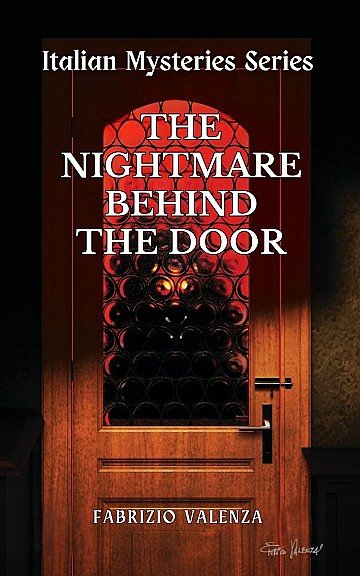
A recurring element that unites “The Desert of Carcosa” with “The Nightmare Behind the Door” is the transformation of familiar space into a place of threat. While in the horror novel protagonist Enrico discovers that his friend’s villa harbors malevolent presences, in “The Desert of Carcosa” it’s the entire town of Verulengo that reveals itself pervaded by supernatural forces.
This narrative choice reflects one of my deepest convictions: true terror is born when what we consider safe and familiar reveals itself as alien and threatening. There’s no need to go to exotic places to find mystery; it’s often hidden around the corner from home.
Adolescence as Threshold Between Worlds
“The Desert of Carcosa” develops more broadly and articulately a theme I’ve always felt particularly close to: adolescence as a moment of revelation. The protagonists of the B.R.A.V.I. group live that phase of life when childhood certainties crumble and access opens to a more complex and often disturbing reality.
This passage recalls Andrea Nascimbeni’s journey in “The Isle of the Dead”: he too, despite being an adult, experiences a sort of second intellectual adolescence when confronting mysteries that challenge his positivist scientific training.
The Weight of Generations
Another red thread running through my works is the weight of family past on present protagonists. In “The Desert of Carcosa,” the Luschi family guards ancestral secrets and responsibilities passed down from generation to generation. Roberto Luschi, Stefano’s father, carries on his shoulders the weight of knowledge he inherited and must transmit.
This theme echoes in my previous works: the idea that the present is always influenced by forces from the past acting beneath the surface, that every family carries untold stories that sooner or later resurface to confront new generations.
The Supernatural as Mirror of Interiority
A distinctive characteristic of my approach to the fantastic is that the supernatural is never mere escapism, but always a reflection of real interior conflicts. In “The Isle of the Dead,” the island’s funeral rites represent humanity’s obsession with death and the afterlife. In “The Nightmare Behind the Door,” the presences tormenting Enrico are the materialization of his deepest fears.
In “The Desert of Carcosa,” the “wolf in the sky” that torments Stefano’s dreams becomes the tangible representation of typical adolescent anxieties: the fear of growing up, of taking responsibility, of discovering that the world isn’t the safe place one believed it to be.
The Philosophy of Knowledge in the Fantastic
My philosophical journey, culminating in the publication of “The Mystical Philosophy of Knowledge,” subtly permeates my fantastic narratives as well. The search for hidden truth, which in philosophy translates into investigating the mechanisms of human knowledge, becomes in my stories the discovery of parallel realities and forces acting beyond ordinary perception.
The protagonists of my novels are always, in a certain sense, unconscious philosophers who question the nature of reality through direct experience of mystery.
The Mediterranean as Narrative Root
“The Desert of Carcosa” and “The Isle of the Dead” also share a deep rooting in Mediterranean narrative tradition. This isn’t just about geographical setting, but about an approach to the fantastic that has its roots in the culture of our sea.
This “Mediterranean branch of fantastic narrative,” which I’ve helped develop, privileges:
- Symbolic dimension over special effects
- Psychological depth over pure action
- Mystery as search for meaning over terror for its own sake
Toward a Poetics of the Invisible
All my narrative works revolve around a cardinal concept: “what is essential is invisible to the eye,” as the Little Prince reminds us. Whether dealing with the forces of Carcosa, the secrets of the island of the dead, or the presences wandering through the villa in “The Nightmare Behind the Door,” what truly matters is never immediately visible.
My protagonists must learn to see beyond the surface, to recognize hidden signs, to decipher the symbols that reality offers to those who know how to observe. This applies to Stefano who must interpret his dreams, to Andrea Nascimbeni who must understand the island’s rites, to Enrico who must recognize the nature of the presences surrounding him.
Writing as Act of Revelation
“The Desert of Carcosa” brings to completion a journey I began with my first novels: writing as an instrument for unveiling the mysteries of existence. Each of my stories is, fundamentally, an attempt to illuminate those dark corners of human experience where essential truths hide.
My goal has never been to frighten or amaze for its own sake, but to use the fantastic as a magnifying lens for observing reality from unprecedented perspectives. The monsters in my stories are always, ultimately, mirrors reflecting our deepest and most authentic fears.
An Invitation to the Reader
For those who have followed my narrative journey, “The Desert of Carcosa” offers the opportunity to rediscover familiar themes and atmospheres in a more mature and complex form. For those approaching my stories for the first time, it represents an ideal gateway to a coherent and recognizable narrative universe.
Each of my stories dialogues with the others, creating a network of references and resonances that enriches the reading experience. The true pleasure, for the attentive reader, lies in recognizing these echoes, in grasping how the same existential concerns find expression in different but complementary narrative forms.
Ultimately, this is what distinguishes a simple storyteller from a true writer: the ability to create a recognizable world, where every story contributes to illuminating a different aspect of the same great question about the meaning of human existence.