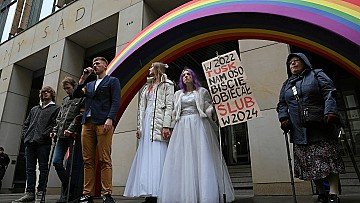
Here is a concise overview of what the new Court of Justice of the EU (CJEU) ruling means for same sex couples moving or living across the EU.
1. What the ruling does
- What is this ruling about?
The Court of Justice of the European Union issued a landmark judgement in the case Jakub Cupriak-Trojan and Mateusz Trojan v Wojewoda Mazowiecki (C-713/23), requiring all EU Member States to recognise same sex marriages performed in other EU countries so that EU free movement rights are guaranteed. When a couple is legally married in one EU Member State, their marital status must be acknowledged when they move to or reside in another. Otherwise, the Court said that it is a discrimination based on sexual orientation.
- Does this mean same sex marriage is now legal everywhere in the EU?
Not exactly. The judgment does not force any country to introduce marriage equality at home, and this is expressly mentioned in the judgment. It only requires every EU Member State to recognise a same sex marriage that was legally performed in another EU country. This means your marriage must be acknowledged when you move across borders.
- Are all Member States affected, including those that do not allow same sex marriage?
Yes. Countries whose national laws do not allow same sex marriage must still recognise marriages performed elsewhere in the EU to ensure EU free movement rights and the fundamental right to private and family life are guaranteed. This recognition must grant the rights that accompany marital status, such as residency rights, social benefits, inheritance, next of kin status and others.
- Does the ruling require countries to change their national marriage laws?
No. The judgment does not oblige any Member State to introduce marriage equality. However, it requires them to create a non-discriminatory and workable administrative procedure to recognise same sex marriages performed in other EU countries, if they don’t have one already.
- What rights must Member States grant when recognising a same sex marriage?
Recognition must be effective and meaningful. This may include, depending on the rights marriage grants in the specific countries:- Residence and family reunification rights
- Social security coordination
- Access to public services
- Inheritance and tax rights
- Next of kin status in healthcare and emergencies
- Rights connected to names and documentation
- Rights connected to parenthood, such as adoption or access to as adoption or access to assisted reproductive technologies (ART)
Member States cannot offer a limited or symbolic form of recognition that leaves couples without granting substantive rights attached to marriage.
- Can a Member State use a different procedure instead of transcribing the marriage certificate?
Yes. The ruling allows flexibility in procedures, such as transcription, registration or an equivalent mechanism, as long as the process is not discriminatory or burdensome and ensures full recognition of the marriage. A state cannot create obstacles that delay, discourage or deny recognition. In the case of Poland, the Court considered that the transcription of marriage certificates in the civil register is the only way for marriage to be recognised in that country.
2. Who is covered
- I got married in a non-EU country. Can I transcribe my marriage in all EU countries?
The judgment applies only to EU citizens who lawfully concluded a marriage in an EU Member State in which they exercised their freedom to move and reside. If your marriage was concluded outside the EU, you cannot rely on this judgment to require transcription in a Member State where same sex marriage is not legal.
- I live in the EU but I am not an EU citizen. I got married to an EU citizen. Can our marriage be transcribed in other EU countries?
This depends on each national system, but the specific judgment applies to marriages concluded by EU citizens in an EU Member State where they exercised their free movement rights. It does not directly regulate marriages involving a non-EU spouse who did not exercise free movement.
- I live in the EU but I am not an EU citizen. I got married to another non-EU citizen. Can our marriage be transcribed in other EU countries?
This falls outside the scope of the judgment. The ruling focuses on marriages concluded in an EU Member State by people who exercised their freedom to move and reside under EU law. However, in the Coman judgement against Romania, the CJEU decided that EU Member States have an obligation to grant the spouse (including from a country outside the EU) of an EU citizen a residence permit in the same way they would grant permits to different-sex couples. Although Romania has yet to implement this judgment, all couples in the same situation across the EU can rely on it.
- My country does not recognise same sex marriage but offers civil unions. Would this ruling force countries like Italy to transcribe a marriage performed in another EU country?
Yes, for free movement purposes. A country must recognise the marital status of a same sex couple legally married in another EU Member State and grant the rights linked to that status, even if it offers only civil unions at national level.
3. Practical recognition and procedures
- What should couples do to get their marriage recognised in another EU country?
Recognition works differently across EU Member States, and the process can feel confusing. Local LGBTI organisations and equality bodies can guide you through the steps in your country and help you understand what you may need to prepare. - What if authorities refuse to recognise our marriage?
You still have rights. If a country refuses recognition:- Ask for the refusal in writing.
- Seek support from equality bodies or LGBTI organisations.
- With the help of local organisations or lawyers, the CJEU ruling will allow you to challenge that refusal through the national procedures.
EU law requires all Member States to comply with the judgment.
4. Families and children
- What does the ruling mean for families with children?
The main focus is marital status, but recognising parents as married can have downstream effects on:- Recognition of parental responsibility
- Access to family benefits
- Administrative procedures related to children
The ruling builds on previous EU case law that requires recognition of parent-child relationships established in another Member State.
5. Country landscape
- Which EU countries do not have marriage equality?
Bulgaria, Croatia, Cyprus, Czechia, Hungary, Italy, Latvia, Lithuania, Poland, Romania and Slovakia.
- Which countries do not legally recognise same sex partnerships?
Bulgaria, Romania, Slovakia, Lithuania and Poland.
- Which countries will experience the biggest changes because of this ruling?
Countries that do not allow same sex marriage or have limited recognition for rainbow families will need to adjust the most. The ruling increases pressure on governments that have stalled or resisted legal recognition.
6. Wider legal and political implications
- How does this ruling fit within broader EU case law?
The judgment builds on earlier decisions stating that:- The term spouse under free movement law includes same sex spouses
- Parent-child relationships established in one Member State must be recognised by others
- Legal gender recognition obtained in one Member State must be recognised by others
- Non-discrimination is a core EU principle
It confirms a trend toward consistent cross-border protection of LGBTI persons and their families.
It also confirms that the prohibition of discrimination on grounds of sexual orientation enshrined in the Charter is a general principle of EU law that is mandatory and confers enforceable rights on individuals.
- What does this mean for future LGBTI rights in Europe?
This ruling is a major step forward for unified family recognition in the EU. While it does not mandate marriage equality, it:- Strengthens the legal protection of same sex couples
- Prevents governments from denying recognition
- May encourage national reforms and future EU initiatives
- Provides clarity and security for families who move, work and live across borders
- Why is this ruling important for LGBTI rights in Europe?
It protects LGBTI families who move across borders, prevents Member States from denying valid marriages, reinforces EU non-discrimination obligations and continues a clear line of case law supporting the rights of LGBTI people.
- Where can people get help or more information?
ILGA-Europe will continue providing updates, legal resources and guidance for affected couples and communities. National LGBTI organisations, legal clinics and equality bodies can also assist. ILGA Europe’s member organisations can be found on our website.