Researchers from the ICTs Against Climate Change (ICT VS CC) group of the ITACA Institute at the Universitat Politècnica de València, led by professors José Vicente Oliver and Edgar Lorenzo, are participating in Urban-Flow, a European project funded by the Horizon Europe program whose aim is to support cities in their transition toward more sustainable, resilient, and climate-neutral urban models.
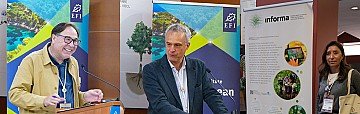
The initiative, with a four-year duration and a budget of 17 million euros, held its kick-off last February in Valencia. This meeting served to define the initial work plan for the project and to establish its main objectives.
“Urban-Flow brings together universities, research centers, public administrations, technology companies, and European innovation networks with the purpose of turning the climate commitments of European cities into concrete actions at the neighborhood scale”, explains Professor José Vicente Oliver, principal investigator of the project at UPV.
The ITACA researcher adds that in Valencia, “we are especially concerned about air pollution derived from traffic and the health of sensitive populations and other vulnerable groups.”
For this reason, the work will focus on the development and validation of advanced ICTs for practical and replicable solutions that make it possible to balance the use of public space and urban mobility, “two key areas for reducing emissions and improving quality of life in cities”, notes Professor Edgar Lorenzo, ITACA researcher and project participant.
Case studies in European cities
The research will work directly with Valencia, Florence, and Tampere as pilot cities, while Brussels, Plzeň, and Edinburgh will participate as follower cities. This approach will enable testing, adapting, and scaling solutions developed across different European urban contexts.
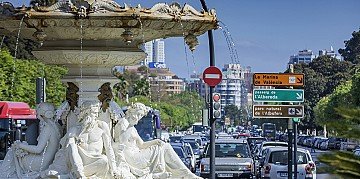
During the initial meeting in Valencia, participants visited various local initiatives focused on sustainability and urban innovation. In addition, special attention was given to Valencian neighborhoods affected by the October 2024 DANA, highlighting the importance of integrating climate resilience into the planning of future cities.
Digital technologies for city planning
Among the key tools to be developed within the project are urban digital twins, highly accurate digital models that will allow cities to simulate different scenarios, evaluate the impact of urban interventions, and optimize decision-making before implementing changes in public space.
Likewise, Urban-Flow will promote the creation of City Living Labs, collaborative spaces where public administrations, citizens, companies, and research centers will work together to design and validate innovative solutions for urban transformation.
For all these reasons, the participation of the ITACA-UPV Institute reinforces the role of technological research in developing advanced digital solutions that contribute to building more sustainable, smart, and resilient cities.