Electrified vehicles incorporate components that operate under demanding thermal, electrical and environmental conditions. Thermal management systems, high-voltage connectors and charger housings each require specific combinations of properties to fulfil their intended function. Material selection therefore plays an important role in addressing the different demands found across electrified powertrain architectures.
For thermal system components, resistance to hydrolysis and heat exposure is an important consideration. DINALON® A1X25 G35 HHY-4102 is a PA6.6 grade developed for environments where long-term exposure to coolant and elevated temperatures can influence material behaviour. PA6.6 provides excellent hydrolysis and heat resistance to support the operational efficiency of thermal management systems.
For HV connectors, colour stability helps maintain clear identification throughout the service life of the component. DINALON® B1S25 G30V0 H-2003 is presented as a PA6 grade designed to preserve colour stability under the reported test conditions. This feature contributes to the safe handling of electrified powertrain components.
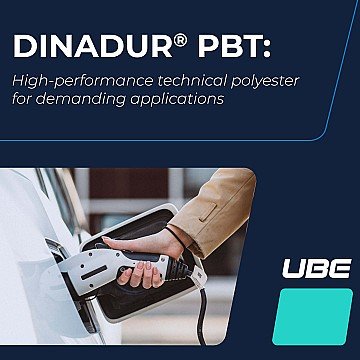
For HV charger housings, key material properties include electrical insulation, thermal durability and resistance to chemical exposure and harsh weather conditions. DINADUR® PBT1S25 G30YV0 H with the highest top tracking resistance (CTI 600 volts), combines these features while also achieving V0 flame classification with Yellow card certification and high glow wire performance according to the reported tests. PBT materials offer excellent insulation properties for charging systems.
These examples illustrate how different material technologies can address the needs of thermal management systems, HV connectors and charger housings within electrified mobility. Each use case requires a specific balance of heat resistance, electrical performance and durability.
Download the technical document to learn more about UBE solutions for Powertrain Components.