In the silence of my study in Rivoli Veronese, surrounded by my books and the stories I’ve created over the years, news arrived that has illuminated one of my dearest professional paths: I have been admitted as a member of the Horror Writers Association.
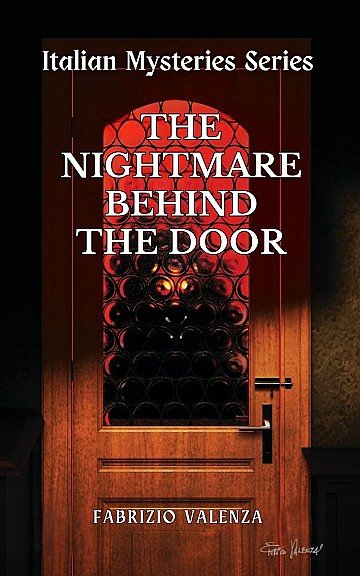
Every writer has their rituals. Mine includes a cup of coffee in mid-morning, sometimes a cream-filled pastry and cappuccino, and the determination to write at least a thousand words between eight and noon. It’s in these moments of creative quiet that I gave life to the characters of “The Isle of the Dead,” imagined the disturbing atmospheres of “The Nightmare Behind the Door,” and explored the fantastic dimensions of “The Desert of Carcosa.”
I never would have imagined, when writing my first stories at ten years old, that one day I would be recognized by the same organization that counts among its members the authors who have shaped the horror genre as we know it today.
Mediterranean Roots in a Global Context
What makes this admission particularly significant is the opportunity to bring a different voice to the international horror literature landscape. My approach to the fantastic is deeply rooted in Mediterranean culture, in its ancient legends, in its peculiar relationship with death and the sacred.
The Mediterranean fantastic narrative that I’ve tried to develop in my novels is not so much a regional variation of Anglo-Saxon horror, but rather a tradition with its own characteristics, drawing on a different imagery and expressing itself through specific narrative modalities.
As I like to remember, one of my ancestors from Agrigento, Baron Celauro, assisted Goethe in his search for the mythical original plant (the Urpflanze). Similarly, my work as a writer is a continuous search for that unifying element that underlies the variety of human experience, especially in its most disturbing and mysterious manifestations.
Beyond Entertainment: Horror as a Philosophical Tool
I have always considered horror not just as a literary genre, but as a tool for philosophical inquiry. Stories of ghosts, monsters, and supernatural phenomena are powerful metaphors for exploring collective fears, social taboos, and the existential questions that have accompanied us for millennia.
As a philosopher as well as a writer, I see in fantastic narrative a way to give form to the formless, to make tangible the intangible, to express through the language of symbol what escapes the rational approach.
Admission to the HWA represents for me confirmation that this approach has its validity and relevance even in an international context.
A New Chapter for Tree of Mystery
Naturally, this experience will also enrich the work I do with Albero del Mistero, where I help aspiring writers find their voice and improve their narrative skills.
Creative writing courses and Exlibris consultations will benefit from new perspectives and exchanges with authors from different literary traditions. But above all, I will be able to bring to my students confirmation that even starting from a specific cultural dimension – the Mediterranean one – it is possible to reach an international audience and recognition.
Personal Reflections
As I write these lines, I think back on the long journey that has brought me here. To the first stories written as a child, to the published novels, to the stories yet to be told, to the difficulties experienced in gaining recognition. I think of the sleepless nights spent chasing an elusive idea, the moments of doubt and those of lightning inspiration.
Being admitted to the HWA is not just professional recognition, but also confirmation that it is worth tenaciously pursuing one’s creative passion, even when the path is long and not without obstacles.
As a member of Mensa Italy (membership 6304), I have always believed in the importance of combining analytical rigor with creative freedom. As a writer, I have tried to give life to stories that speak of the “whole reality,” according to that maxim from The Little Prince that I love to quote: what is essential is invisible to the eyes.
These values will continue to guide my work as a writer and teacher, now enriched by this new belonging to a global community of narrators of the disturbing and the marvelous.
Looking to the Future
The road that opens before me is rich with possibilities. New novels to write, new stories to explore, new students to guide on their creative journey.
I don’t know where this new chapter will take me, but I know I will continue to do what I have always done: dream, imagine, write. And share with others the joy and challenge of giving form to mystery through words.