insights from Smart City Expo World Congress 2025
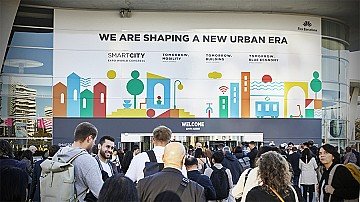
Barcelona felt especially electric this year, not just because Smart City Expo World Congress brought together tens of thousands of innovators, city leaders, and technologists, but because 2025 marked a turning point. For the first time, AI didn’t appear as a standalone theme or a future promise. Instead, it was woven into nearly every conversation, every booth, and every serious urban strategy.
a new era of AI-enabled cities
As I walked through the halls of Fira Gran Via from November 4 to 6, it became evident that cities are no longer debating whether to adopt AI. They’re asking how fast they can scale it, how they can govern it responsibly, and how to ensure the benefits reach every resident. The biggest signal of this shift was the brand‑new AI-Enabled Cities area, a dedicated space where cities and companies showcased real deployments rather than conceptual dashboards. It featured everything from AI systems that help emergency teams respond to floods faster, to predictive maintenance models that warn infrastructure teams before pipes burst or tunnels flood. There was an undeniable sense of maturity: these weren’t prototypes; they were products.
practical gen AI for urban administration
Generative AI also had its moment, though in a surprisingly grounded way. Rather than grand visions of fully automated governments, cities shared how GenAI is reshaping everyday administrative work like drafting permits, summarizing complex regulations, speeding up call‑center responses, or preparing citizen communications in multiple languages. What stood out was the emphasis on guardrails: European cities were laser‑focused on transparency, accuracy, and model governance.
Your browser does not support the video tag.
Meanwhile, “physical AI” which NVIDIA and several partners pushed heavily dominated the mobility and public safety zones. Real‑time video analytics ran on edge devices, detecting traffic anomalies or dangerous pedestrian behavior, all without sending raw footage to the cloud. Vendors emphasized speed and privacy as twin priorities, and for the first time, you could feel cities nodding along rather than hesitating.
Attending several mobility sessions showed that mobility solutions this year weren’t just theoretical, they were measurable. Cities presented data showing reduced congestion, fewer accidents at problematic intersections, and more efficient bus corridors powered by AI-driven signal optimization. In a year defined by climate anxiety across Europe, AI-driven resilience solutions received the warmest reception. Flood detection tools, sensor networks, and predictive emergency alerts felt less like optional upgrades and more like baseline infrastructure for the decade ahead.
But it wasn’t all tech. A recurring thread throughout the congress was responsibility: How do cities audit AI systems? Who ensures fairness? How can governments avoid vendor lock‑in? And how do we train city employees, not just data teams to work comfortably alongside AI tools? Many sessions moved beyond high‑level ethics to practical procurement of language, data governance templates, and interoperability frameworks.
eurotech at SCEWC: strengthening key partnerships
Representing Eurotech and having some goal-setting meetings with interesting partners like NVIDIA, PNY, WaterView, Sprinx, A.I. Tech, Ipsotek and Intelevision among many others made this event the right place to be when you have the right technology stack to offer. The right ODMs mapped with the right solution providers matched with the right technology partners clearly seemed like a sweet spot for all end-customers specially for Smart Cities.
Stepping back after three days of conversations, demos, and panels, the story of SCEWC 2025 becomes clear:
AI has shifted from the innovation lab into the operations center. Cities are beginning to demand measurable outcomes, transparent models, and systems that integrate with existing workflows. And vendors, large and small, are finally meeting that expectation.