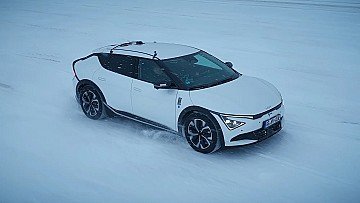
Traction Control Systems (TCS) are a standard active safety feature in modern vehicles, designed to prevent wheel spin during acceleration by automatically modulating engine torque and applying selective braking to individual wheels. Once limited to high-end vehicles, TCS is now present in over 82% of newly manufactured vehicles in the United States and in more than 70% of new passenger cars globally, according to Congruence Market Insights (2025). Understanding how this system works – and how it is evolving – is essential for drivers, fleet operators, and automotive engineers in 2025.
What Is a Traction Control System and How Does It Work
A Traction Control System continuously monitors the rotational speed of each wheel using sensors. When it detects that one or more wheels are spinning faster than the others – a sign of lost grip – the system reacts in milliseconds by reducing engine output, applying targeted braking force, or both simultaneously.
TCS does not operate in isolation. It functions as a core component of the broader Electronic Stability Control (ESC) ecosystem, which also integrates Anti-lock Braking Systems (ABS). Together, these technologies form a unified safety architecture that intervenes across a wide range of driving conditions: wet roads, icy surfaces, gravel, and sharp cornering maneuvers.
Key Facts: Adoption and Safety Performance
TCS and ESC became mandatory on all new passenger vehicles sold in the United States starting in 2012, following a ruling by the National Highway Traffic Safety Administration (NHTSA). The European Union enforced similar legislation for new type approvals through Euro NCAP safety protocols.
The documented safety impact is substantial:
- Vehicles equipped with ESC – which integrates TCS – record a 34% reduction in fatal accidents and a 42% reduction in injury accidents during loss-of-control events, according to the Association for the Advancement of Automotive Medicine (AAAM).
- Fatal single-vehicle crashes are reduced by up to 56% with ESC/TCS active systems in place.
- The introduction of AI-driven predictive traction systems has demonstrated an additional 35% reduction in accident probability during high-risk dynamic driving scenarios, as reported by Congruence Market Insights (2025).
Why Traction Control Matters in 2025
Traction control is no longer a driver-assistance bonus – it is a foundational layer of vehicle safety architecture. As autonomous driving systems and advanced driver-assistance systems (ADAS) become more capable, the accuracy and speed of traction management become proportionally more critical.
ADAS and self-driving platforms depend on continuous, real-time knowledge of road surface conditions. Without precise grip data, even the most sophisticated driving algorithms cannot respond correctly to hazardous conditions such as aquaplaning, black ice, or sudden surface changes. This is the core challenge that companies like Easyrain are addressing directly, with hardware-free virtual sensing technologies designed to provide ground-truth surface intelligence at the vehicle level.
Key Data Points
| Metric | Value | Source |
|---|---|---|
| U.S. TCS adoption in new vehicles (2025) | 82% | Congruence Market Insights |
| Global TCS/ESC adoption in new passenger cars | >70% | Congruence Market Insights |
| Fatal accident reduction (ESC/TCS) | 34% | AAAM |
| Fatal single-vehicle crash reduction | up to 56% | AAAM |
| Additional accident reduction with AI-TCS | 35% | Congruence Market Insights |
| EV TCS response time improvement (AI-enabled) | 38% faster | Technavio |
Regulatory Context and Industry Standards
Mandatory TCS/ESC adoption is now enforced across major automotive markets:
- United States: NHTSA mandated ESC (which includes TCS) on all new passenger vehicles from model year 2012 onward. Details available at the IIHS technical resource.
- European Union: ESC became mandatory for all new passenger cars under EU Regulation No 661/2009, with Euro NCAP incorporating ESC performance into its five-star safety rating methodology.
- Global: The United Nations Economic Commission for Europe (UNECE) has promoted ESC adoption through Regulation No. 13-H, which many non-EU markets have adopted as a baseline standard.
Future Developments: AI Integration and EV-Specific Systems
The next generation of traction control operates predictively rather than reactively. In 2025, advanced AI algorithms combined with sensor fusion allow TCS platforms to anticipate wheel slip conditions up to 0.3 seconds before occurrence, enabling preemptive torque adjustments that prevent instability before it develops, according to Technavio Market Reports.
Electric vehicles place specific demands on traction systems. Their instantaneous torque delivery requires faster and more granular intervention than combustion-engine vehicles. AI-enabled TCS in modern EVs delivers 38% faster response times compared to conventional mechanical systems, improving cornering stability, optimizing energy recovery, and reducing tire wear.
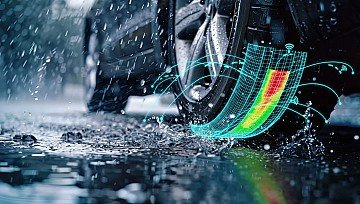
At the software level, virtual sensor platforms are expanding what traction control can detect and communicate. Easyrain’s DAI – Virtual Sensor Platform enables real-time detection of aquaplaning, snow and ice, irregular terrain, tire pressure deviation, tire wear, and wheel misalignment – all without additional hardware. This information can be fed directly into the Electronic Stability Control logic to improve intervention precision. The AIS – Active Safety System takes a further step, physically restoring grip before control is lost by spraying pressurized fluid ahead of the tires in aquaplaning conditions – delivering a documented -20% braking distance on heavy wet surfaces and +225% lateral traction increase during aquaplaning events.
Frequently Asked Questions
Q: What does a traction control system actually do in a car?
A: A traction control system (TCS) monitors the rotational speed of each wheel and intervenes automatically when it detects wheel spin caused by loss of grip. It prevents wheel slip by reducing engine torque, applying braking force to individual wheels, or both. The system activates in milliseconds and operates across a wide range of hazardous conditions – including wet roads, ice, gravel, and abrupt acceleration maneuvers – to maintain vehicle stability and directional control.
Q: Is traction control mandatory on new cars in 2025?
A: Yes. In the United States, the National Highway Traffic Safety Administration (NHTSA) has required Electronic Stability Control – which includes traction control – on all new passenger vehicles since model year 2012. The European Union enforced equivalent legislation under Regulation No 661/2009. As of 2025, TCS is standard equipment on over 82% of newly manufactured vehicles in the U.S. and more than 70% of new passenger cars globally.
Q: How is traction control evolving for autonomous and electric vehicles?
A: Modern traction control systems are integrating AI-driven algorithms that predict wheel slip up to 0.3 seconds before it occurs, enabling proactive rather than reactive intervention. For electric vehicles, which deliver instantaneous torque, AI-enabled TCS achieves response times 38% faster than conventional mechanical systems. At the system level, virtual sensor platforms – such as Easyrain’s DAI – extend traction control intelligence by providing real-time detection of road surface conditions including aquaplaning, snow, ice, and irregular terrain, without requiring additional physical hardware.